
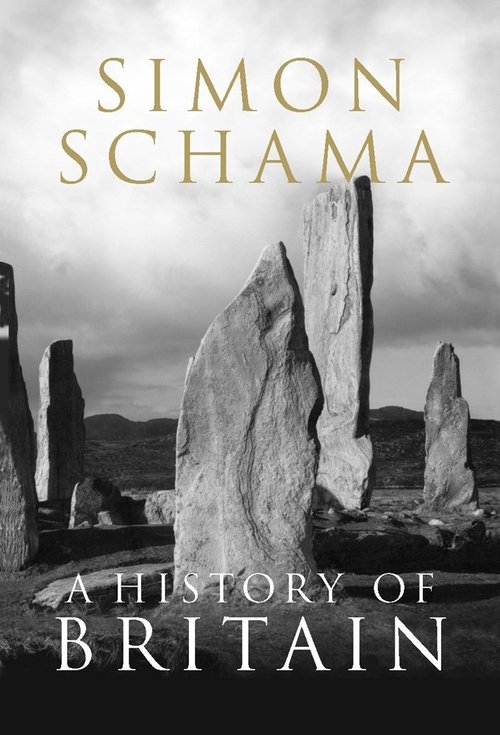
A History of Britain
Plot
Stretching from the Stone Age to the year 2000, Simon Schama's Complete History of Britain does not pretend to be a definitive chronicle of the turbulent events which buffeted and shaped the British Isles. What Schama does do, however, is tell the story in vivid and gripping narrative terms, free of the fustiness of traditional academe, personalising key historical events by examining the major characters at the centre of them. Not all historians would approve of the history depicted here as shaped principally by the actions of great men and women rather than by more abstract developments, but Schama's way of telling it is a good deal more enthralling as a result. Schama successfully gives lie to the idea that the history of Britain has been moderate and temperate, passing down the generations as stately as a galleon, taking on board sensible ideas but steering clear of sillier, revolutionary ones. Nonsense. Schama retells British history the way it was--as bloody, convulsive, precarious, hot-blooded and several times within an inch of haring off onto an entirely different course. Schama seems almost to delight in the goriness of history. Themes returned to repeatedly include the wars between the Scots and the Irish and the Catholic/Protestant conflicts--only the Irish question remains unresolved by the new millennium. As Britain becomes a constitutional monarchy, Schama talks less of Kings and Queens but of poets and idea-makers like Orwell. Still, with his pungent, direct manner and against an evocative visual and aural backdrop, Schama makes history seem as though it happened yesterday, the bloodstains not yet dry.
Where to watch
Credits
Directed by: Liz Hartford, Clare Beavan, Ian Bremner
How the Pulse Score works
For series, Pulse starts from the IMDb rating shrunk by vote count, then applies FORMAT CALIBRATION. Series score systematically higher than films on IMDb, so using the raw number would unfairly push a show like A History of Britain to the top of a film catalogue. Calibration maps the series distribution onto the film one; meaning 68 is COMPARABLE to a film with the same Pulse.
One more difference from films: Letterboxd does not track series, so series Pulse derives from a single source (IMDb) rather than two.
How did this series move you?
Member Reviews (0)
How did this film move you? Sign in to write a review
Loading…
No reviews yet. Be the first to review!
Reviews could not be loaded.